
Published November 2, 2026
House Types in Fort Wayne, Indiana: A Buyer’s Guide to Local Home Styles

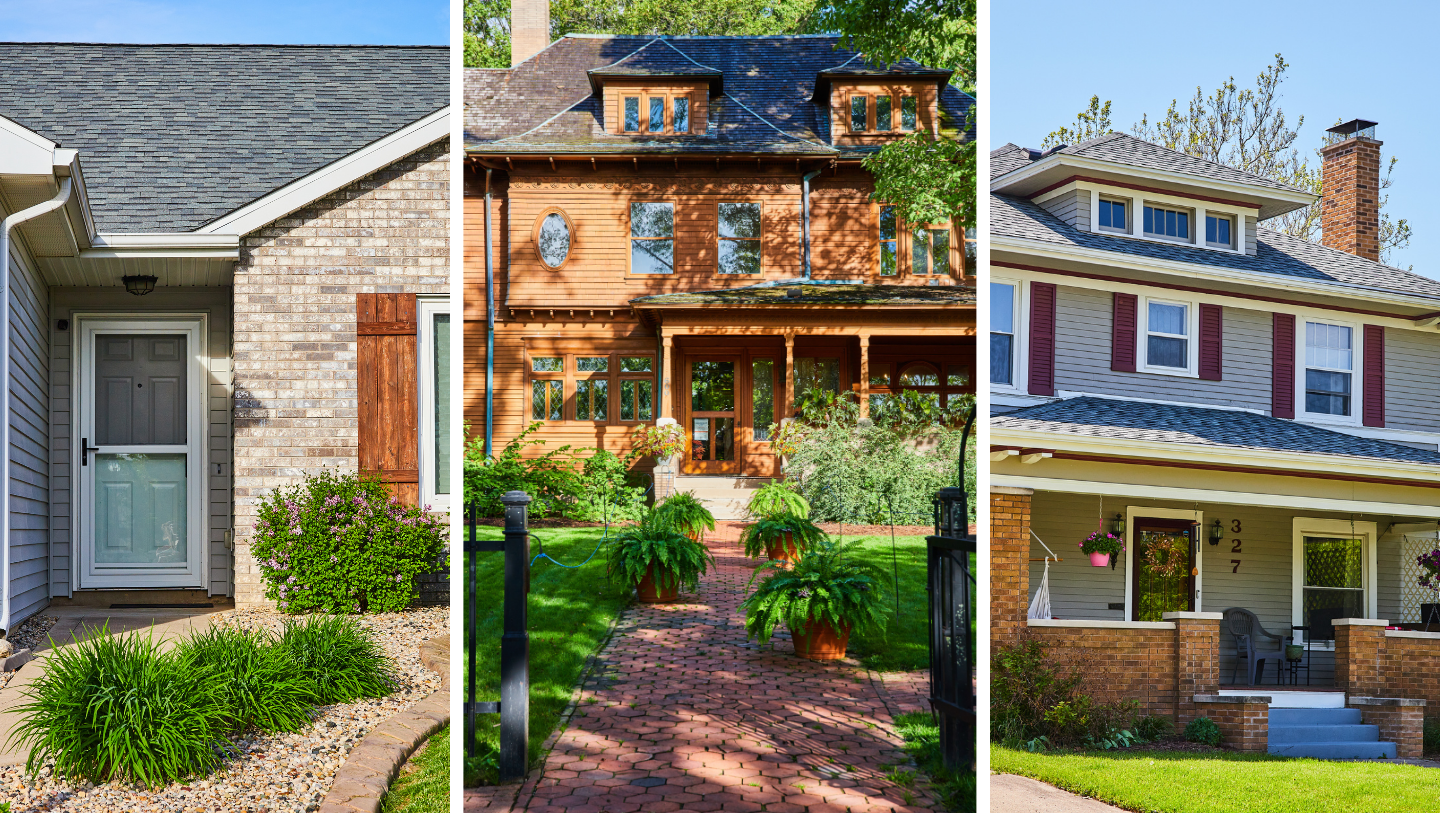
Quick answer: Fort Wayne's housing runs more than a century deep. Craftsman bungalows, Foursquares, and Tudors fill the older neighborhoods, ranches spread through post-war pockets, and new construction clusters in Aboite. In 2024, average home values in the city's local historic districts ran 13% higher than the rest of the city. Each type has its own upkeep rhythm.
The Local Scoop · Fort Wayne House Types Guide
Victorians, Craftsman bungalows, Foursquares, Tudors, ranches, and new builds. Here's where to find each house type in Fort Wayne, Indiana, and what to check before you make an offer.
By Dave Brough, REALTOR® | Anthony REALTORS · Last updated October 12, 2026
What Are the Main House Types in Fort Wayne?
Here's a quick map of what you'll find and where to start looking. Neighborhood names come from National Park Service and city records, and they're starting points, not the only places a style shows up.
| House type | Era | Where to look in Fort Wayne | Check first |
|---|---|---|---|
| Victorian, Italianate, Queen Anne | Late 1800s | Williams-Woodland Park, Beechwood, West Central | Wiring, plaster, trim |
| Craftsman bungalow | Early 1900s | Foster Park neighborhood, North Anthony, Lafayette Place | Wiring, plumbing, porch, roof |
| American Foursquare | Early 1900s | North Anthony, Williams-Woodland Park, Harrison Hill | Kitchen and bath updates |
| Tudor Revival | 1920s and 1930s | North Anthony, Lafayette Place, Forest Park Boulevard | Roof valleys, stucco |
| Ranch and split-level | Post-war | Kirkwood Park, Indian Village, Foster Park neighborhood | Furnace, windows, panel |
| New construction | Today | Aboite | HOA, warranty, code edition |
What Are Victorian, Italianate, and Queen Anne Homes?
These are the oldest houses on the market. West Central began as a residential area in the canal era of the 1830s, and the district was listed on the National Register in 1984. The neighborhood association says it holds the largest collection of homes designed by architects John F. Wing and Marshall Mahurin.
You've got other options for a Victorian. The National Park Service says Queen Anne and Colonial Revival dominate Williams-Woodland Park, about a mile south of downtown, with some Italianate mixed in. Beechwood, a small district southwest of downtown, pairs Italianate and Queen Anne homes with early twentieth-century styles, according to the city.
Plan on older systems. Expect plaster walls, trim that needs paint and repair, and, in some houses, wiring or plumbing from another era. Many of these homes also sit in local historic districts, which means exterior changes go through review.
What Is a Craftsman Bungalow, and Where Do You Find One in Fort Wayne?
A Craftsman bungalow is a one- or one-and-a-half-story home with a low-pitched, overhanging roof, exposed rafters, and a big front porch on tapered or square columns. According to the Pennsylvania Historical & Museum Commission, the style grew out of the English Arts and Crafts movement, and it often has an open plan of connected rooms. In Fort Wayne, the National Park Service lists bungalow and Craftsman homes in the Foster Park neighborhood, on North Anthony Boulevard, and in Lafayette Place.
Porches, wood windows, and rooflines need steady upkeep, and some bungalows still run on original wiring or plumbing. Ask what's been updated, and have an inspector look at the panel, the pipes, and the roof. The payoff is character, solid woodwork, and layouts most buyers wouldn't dream of tearing out.
What Is an American Foursquare?
The Foursquare is a boxy, roughly square two-story house with a low hipped roof, a symmetrical front, and a broad front porch. The Pennsylvania commission calls it a popular, affordable choice in growing suburbs at the start of the twentieth century. It's all over Fort Wayne. The National Park Service says Foursquare is the single most common style on North Anthony Boulevard, and it shows up in Williams-Woodland Park and Harrison Hill too. The North Anthony nomination describes the typical version: a hipped roof, a central dormer, a one-story porch, and four rooms to a floor.
If the kitchen and baths haven't been touched, that's where your renovation money will go. The simple box shape does mean fewer tricky roof lines than a Victorian.
What Is Tudor Revival?
Look for steep roofs, front-facing or multiple gables, and often decorative half-timbering. The Pennsylvania commission says Tudor was second only to Colonial Revival in residential popularity in the 1920s and 1930s, and Tudor houses are almost always stucco, masonry, or masonry-veneered. The National Park Service lists Tudor Revival homes on North Anthony Boulevard, in Lafayette Place, and along Forest Park Boulevard, plus Tudor cottages in the Foster Park neighborhood.
Tudors are charming, but they ask for a closer look. Steep, multi-gable roofs mean more valleys and flashing to inspect, and stucco and half-timbering can let moisture in. Get a roofer to check before you close.
What Are Ranch and Split-Level Homes Like in Fort Wayne?
Ranches are single-story with a long, low profile. Split-levels add a partial second level, often over the garage. Fort Wayne's post-war pockets have plenty of both.
The National Park Service says a building spurt after World War II produced many of the ranch-style homes in the Foster Park neighborhood, alongside small Minimal Traditional and Cape Cod houses. The same nomination ties those small homes to federal housing standards from the early 1930s. Kirkwood Park, platted in 1938 with five additions through 1950, has about 150 mid-sized homes, mostly Colonial Revival and Ranch with some Cape Cods. Indian Village adds mid-century modern homes, and Visit Fort Wayne lists a walking tour of them. Homes.com's profiles also point to Village Woods, Kyle Road, and Brandonwood for ranch-style or split-level homes.
Single-level living is the big draw. Ask how old the furnace, water heater, and electrical panel are. Many of these houses are well past 50, and the structure can be sound while the mechanicals are due.
What Should You Know About New Construction in Fort Wayne?
Most new building has landed in southwest Fort Wayne. The city's Southwest Extended annexation took effect in 2006, adding 12.86 square miles and 22,587 residents, and builders still list new communities there. Granite Ridge's The Haven, off Hadley Road, is one example.
Builders follow buyers. NAHB's 2024 survey found laundry rooms and patios wanted by 86% of buyers and ENERGY STAR windows by 83%, so expect those on most spec sheets. New homes are built under Indiana's statewide residential code, which the Indiana Department of Homeland Security says applies in every jurisdiction. Ask which code edition your home was permitted under, then ask about the builder's warranty and the HOA.
What Are the Real Benefits of Buying a Historic Home in Fort Wayne?
Start with the money. According to the Indiana DNR, the state's Residential Historic Rehabilitation credit covers 20% of what you spend fixing up a historic home, and minimum spending requirements apply. The home must be at least 50 years old, be your primary residence, and be listed in the Indiana Register or contribute to a listed district. The work has to follow the Secretary of the Interior's Standards, and the DNR reviews your plan before certifying the finished job, so apply before you start.
This credit has an annual statewide funding cap, and once it's allocated, no new applications are approved until the next fiscal year. Rules and amounts can change, so check the Indiana DNR's residential tax credit page or contact the division before you plan around the credit.
The market side matters too. The City of Fort Wayne says average home values in local historic districts ran 13% higher than the rest of the city in 2024. Those districts cover less than 1% of the city's land, so the supply of homes is limited. The credit applies to rehab costs, not to the purchase itself.
What Should You Prepare for Before Buying an Older Home?
A few issues turn up often enough in Fort Wayne's older housing stock that it's worth asking about them before you make an offer.
• Knob-and-tube wiring: InterNACHI says it was common from about the 1880s to the 1940s, has no ground wire, and that many insurers refuse to cover homes that have it.
• Galvanized plumbing: According to InspectApedia, galvanized pipe was common until roughly 1950 and typically lasts 40 to 60 years, so it's usually near the end of its life.
• Lead-based paint: The federal disclosure rule covers homes built before 1978. Sellers have to disclose known lead hazards, hand you EPA's pamphlet, and give you a 10-day chance to test, which you can waive, according to the EPA.
Inspection and disclosure steps can vary by property and can change over time, so we'd rather not guess for you here. Once you've found a home you're seriously considering, reach out, and we'll walk through exactly what applies to that property before you make an offer.
What Should You Prepare for Before Buying New Construction?
New construction comes with a different set of questions.
• Ask what the builder's warranty covers in year one versus later years.
• Ask whether the subdivision has an HOA, and get the dues and any planned increases in writing.
• Ask which energy code edition the home was built to.
• Budget for landscaping and other finishing touches that builders often leave to the buyer.
Quick Facts
• West Central was listed on the National Register in 1984.
• In 2024, average home values in Fort Wayne's local historic districts ran 13% higher than the rest of the city.
• Local historic districts cover less than 1% of the city's land area.
• Indiana's residential historic credit covers 20% of what you spend fixing up a historic home, and minimum spending requirements apply.
• Knob-and-tube wiring was common from about the 1880s to the 1940s.
• Galvanized plumbing was common until roughly 1950 and typically lasts 40 to 60 years.
• Federal lead-paint disclosure applies to homes built before 1978.
• The Southwest Extended annexation (2006) added 12.86 square miles to Fort Wayne.
Frequently Asked Questions
What's the most common older house style in Fort Wayne?
It depends on the neighborhood. According to the National Park Service, Foursquare is the most common single style on North Anthony Boulevard, while Colonial Revival leads in Lafayette Place and the Foster Park neighborhood.
Do I get a tax break for buying a historic home in Fort Wayne?
Not for the purchase itself. Indiana's residential credit covers 20% of rehab costs on a primary residence and has an annual funding cap. Confirm current details with the Indiana DNR.
Is knob-and-tube wiring a dealbreaker?
Not necessarily, but many insurers won't cover it. Ask a licensed electrician what it would take to replace it, and check with your insurer before you close.
Are new construction homes cheaper to maintain?
Usually, for the first few years. You'll still want a full inspection, and you should understand any HOA obligations.
Does buying in a historic district restrict what I can do to my home?
It depends on the type of district. A City of Fort Wayne notice says National Register listing alone doesn't prevent a private owner from altering a property. Local historic districts are different, because the city's Historic Preservation Commission enforces a preservation ordinance. Ask the city what a specific address requires.
Where can I find mid-century homes?
Kirkwood Park has about 150 mid-sized Colonial Revival and Ranch homes, and Indian Village has mid-century modern houses. Homes.com profiles also list ranch-style neighborhoods like Kyle Road and Brandonwood.
The Bottom Line
Every Fort Wayne house type has its own personality and its own upkeep rhythm. Older homes bring character, craftsmanship, and sometimes real incentives, along with systems worth inspecting closely. Newer construction trades some of that charm for lower near-term maintenance. Neither one's automatically better. It depends on what you're ready to take on.
Book a Virtual Consultation with a Fort Wayne Real Estate Expert
A virtual consultation with Dave Brough of Anthony REALTORS® is a one-on-one video call where you can ask about buying or selling a home in Fort Wayne, Indiana, including neighborhoods, pricing, timelines, and next steps. Choose the option that fits your goal and pick a time that works for you.
Who is the virtual consultation for?
It's for anyone buying or selling a home in Fort Wayne and the surrounding area, whether you're a first-time buyer, moving up, downsizing, relocating, or just starting to explore your options.
What can we talk about on the call?
Buyers can ask about neighborhoods, budgets, the buying process, and what to check before closing. Sellers can ask about pricing, preparing a home for the market, and what to expect during the inspection and negotiation.
How do I schedule a virtual consultation?
Select the home buying or home selling button above, choose an open time on the calendar, and you're set. You can also call or text (260) 308-4335.
|
|
Dave Brough | Team Leader Anthony REALTORS® | Powered by PLACE Serving Fort Wayne and Allen, Whitley, DeKalb, Huntington, Wells, and Noble Counties Call or text: (260) 308-4335 Email: david@anthonyrealtors.com 4039 S Wayne Ave, Fort Wayne, IN 46807 License: #RB14037649 |

Read Next
Historic Home Tax Credits in Fort Wayne: What to Know
See how tax credits can help with repairs on older Fort Wayne homes.
Read MoreWhat to Expect During the Home Inspection Process
Know what happens on inspection day and how to prepare, whether you're buying or selling.
Read MoreFall Home Maintenance Checklist for Fort Wayne Homeowners
Get your home ready for the cold season with a simple fall checklist.
Read MoreSources
- Pennsylvania Historical & Museum Commission, Bungalow/Craftsman Style (phmc.state.pa.us/Portal/Communities/Architecture/Styles/bungalow.html) — Craftsman bungalow features and origins
- Pennsylvania Historical & Museum Commission, Prairie School Style (phmc.state.pa.us/portal/communities/architecture/Styles/prairie-school.html) — American Foursquare form and popularity
- Pennsylvania Historical & Museum Commission, Tudor Revival Style (phmc.state.pa.us/Portal/Communities/Architecture/Styles/tudor-revival.html) — Tudor Revival features and 1920s-1930s popularity
- National Park Service, North Anthony Boulevard Historic District nomination (npgallery.nps.gov/GetAsset/0f6dabca-1cf0-4801-92eb-c3a0e4793f1e) — styles on North Anthony, Foursquare as the most common, post-war ranches
- National Park Service, Foster Park Neighborhood Historic District nomination (npgallery.nps.gov/GetAsset/62610a42-968b-4372-9d94-985a2849459b) — Craftsman, Tudor cottage, ranch, Minimal Traditional and Cape Cod homes, post-1945 building spurt, federal housing standards, and the city's notice on National Register listing
- National Park Service, Lafayette Place Historic District nomination (npgallery.nps.gov/GetAsset/50cfede5-b5b9-4c49-b992-da512da37ea0) — Lafayette Place style mix
- National Park Service, Lafayette Place record (npgallery.nps.gov/AssetDetail/NRIS/12001147) — Bungalow/Craftsman styles
- National Park Service, Forest Park Boulevard record (npgallery.nps.gov/AssetDetail/NRIS/07000212) — Colonial Revival and Tudor Revival styles
- National Park Service, Williams-Woodland Park Historic District nomination (npgallery.nps.gov/GetAsset/fa66c32e-886b-42c5-99c3-43cee102c0de) — Queen Anne, Colonial Revival, Italianate, and Foursquare homes; location one mile south of downtown
- Indiana DNR, National Register listings, Beechwood and Harrison Hill (in.gov/dnr/historic-preservation/files/hp-nr-021622.pdf) — Beechwood and Harrison Hill styles
- City of Fort Wayne Community Development, Beechwood Historic District (fwcommunitydevelopment.org/custom/smartgov/check-details/index/680) — Beechwood styles and location
- City of Fort Wayne, West Central Historic District brochure (cityoffortwayne.in.gov/DocumentCenter/View/257/West-Central-Historic-District-PDF) — 1984 National Register listing
- West Central Neighborhood Association (westcentralneighborhood.org/?p=1437) — canal-era origins, Wing and Mahurin homes
- Indiana DNR, Kirkwood Park Historic District registration form (in.gov/dnr/historic-preservation/files/hp-Kirkwood-Park-Historic-District.pdf) — Kirkwood Park styles
- WANE, Kirkwood Park listing (wane.com/news/local-news/fort-waynes-kirkwood-park-neighborhood-listed-on-national-register-of-historic-places/amp/) — 1938 plat, five additions, about 150 homes
- Visit Fort Wayne, Waynedale (visitfortwayne.com/neighborhoods/waynedale/) — Indian Village mid-century modern walking tour
- Homes.com, Allen County neighborhoods, page 3 (homes.com/neighborhood-search/allen-county-in/p3/) — Kyle Road and Brandonwood ranch-style homes
- Homes.com, Allen County neighborhoods, page 4 (homes.com/neighborhood-search/allen-county-in/p4/) — Village Woods ranch-style and split-level homes
- City of Fort Wayne Community Development, annexation announcement (fwcommunitydevelopment.org/news/310-city-administration-announces-plan-to-continue-the-growth-and-positive-momentum-in-fort-wayne) — Southwest Extended annexation, 2006
- Granite Ridge Builders, The Haven (graniteridgebuilders.com/find-your-home/communities/the-haven) — example of a new Aboite community
- National Association of Home Builders, Eye on Housing (eyeonhousing.org/2024/04/outdoor-features-a-laundry-room-among-most-wanted-features/) — most wanted home features, 2024
- Indiana Department of Homeland Security, 2020 Indiana Residential Code circular (secure.iot.in.gov/dhs/files/Adoption-and-Implementation-of-2020-Indiana-Residential-Code.pdf) — statewide residential code
- Indiana DNR, State Historic Rehabilitation Tax Credit (in.gov/dnr/historic-preservation/financial-assistance/residential-tax-credit/) — credit amount, eligibility, annual cap
- Indiana DNR, Preservation at the Crossroads, February 2026 (in.gov/dnr/historic-preservation/files/hp_State-Residential-Historic-Tax-Credit-Update.pdf) — National Register properties in the Indiana Register
- City of Fort Wayne, historic preservation study announcement (cityoffortwayne.in.gov/m/newsflash/Home/Detail/326) — 13% higher home values in local historic districts, 2024
- City of Fort Wayne, historic preservation month announcement (cityoffortwayne.in.gov/CivicAlerts.aspx?AID=576) — local historic districts under 1% of city land
- PlaceEconomics, Preservation Is About the Future (placeeconomics.com/resources/preservation-is-about-the-future-the-economic-impact-of-historic-preservation-and-heritage-tourism-in-fort-wayne/) — the 2025 economic impact study
- City of Fort Wayne, Historic Preservation Commission (cityoffortwayne.in.gov/202/Historic-Preservation-Commission) — commission enforces the preservation ordinance
- InterNACHI, Knob-and-Tube Wiring (nachi.org/knob-and-tube.htm) — era, missing ground wire, insurance
- InspectApedia, Galvanized Iron Pipes (inspectapedia.com/plumbing/Galvanized_Iron_Pipes.php) — era and typical lifespan
- EPA, Real Estate Notification and Disclosure Rule Q&A (19january2021snapshot.epa.gov/sites/static/files/documents/1018qa.pdf) — lead-paint disclosure for pre-1978 homes
- Anthony REALTORS, Historic Home Tax Credits in Fort Wayne (anthonyrealtors.com/blog/fort-wayne-historic-home-tax-credit) — related guide
Credit amounts, funding caps, and building codes can change. Confirm current terms with the agencies listed above before relying on a specific figure. Homes.com neighborhood summaries are automated profiles, so verify a neighborhood's housing mix before you tour.

David Brough
| Anthony REALTORS | PLACE
or another way